
Kilimanjaro Safety: AMS, Rescue & Emergency Protocols (2026–2028)
How we keep you safe – from prevention to evacuation. Your trust is our priority.
📑 What you'll learn in this guide
🛡️ Our Safety Philosophy: Descend If Unwell
At Miwaleni Travel, we have one non‑negotiable rule: your health comes before the summit. No summit is worth risking your life. Our guides are trained to recognise altitude sickness early, and we have a strict protocol: if symptoms worsen, we descend. There is no shame in turning back – many climbers return another year and succeed.
✅ Our promise: We will never pressure you to continue if you are unwell. Safety decisions are made together, but your guide has the final authority.
⚠️ AMS, HACE & HAPE – What You Need to Know
| Condition | Symptoms | Action |
|---|---|---|
| Mild AMS | Headache, nausea, fatigue, dizziness, poor appetite, disturbed sleep | Rest, hydrate, don’t ascend. Usually resolves in 24‑48 hours. |
| Moderate AMS | Worsening headache, vomiting, shortness of breath at rest | Stop ascending. Descend if no improvement within a few hours. |
| HACE (cerebral edema) | Confusion, ataxia (loss of coordination), severe lethargy, change in behaviour | Immediate descent – life‑threatening |
| HAPE (pulmonary edema) | Shortness of breath at rest, chest tightness, frothy cough, blue lips | Immediate descent – life‑threatening |
🚨 Red flags: If you or a teammate cannot walk in a straight line (ataxia) or is coughing up pink frothy sputum, descend immediately. These are signs of HACE or HAPE and require urgent evacuation.
✅ 7 Proven Prevention Strategies
- Choose a longer route (7+ days): The single most effective prevention. Lemosho 8‑day and Northern Circuit 9‑day have the lowest AMS rates.
- Walk “pole pole” (slowly, slowly): Our guides set a pace where you can talk comfortably. Never rush.
- Hydrate relentlessly: 3‑4 litres of water daily. Avoid alcohol and excessive caffeine.
- Eat well, even when not hungry: Your body needs calories to acclimatise. Our chefs prepare high‑energy meals.
- Follow “climb high, sleep low”: Our itineraries include acclimatisation hikes where you ascend higher then return to a lower camp to sleep.
- Listen to your body: Be honest with your guide. Mild symptoms are normal; severe symptoms are not.
- Avoid sedatives and heavy meals before bedtime: Both can reduce oxygen intake during sleep.
🛡️ Miwaleni Travel’s 6‑Point Safety Protocol
💊 1. Twice‑Daily Pulse Oximetry
Blood oxygen (SpO₂) and heart rate checked every morning and evening. Readings below 80% trigger immediate guide assessment.
🏔️ 2. Climb High, Sleep Low
Rest days and acclimatisation hikes built into all longer routes – the primary driver of our 95%+ success rate on 8‑day climbs.
💧 3. Guided Hydration Protocol
Guides encourage 3‑4 litres of water daily. All mountain water is filtered and boiled. Hot soups and teas at every camp.
🚑 4. Emergency Oxygen & Gamow Bag
Every expedition carries portable oxygen cylinders and a Gamow hyperbaric bag for life‑threatening altitude emergencies.
🚁 5. AMREF Flying Doctors Partnership
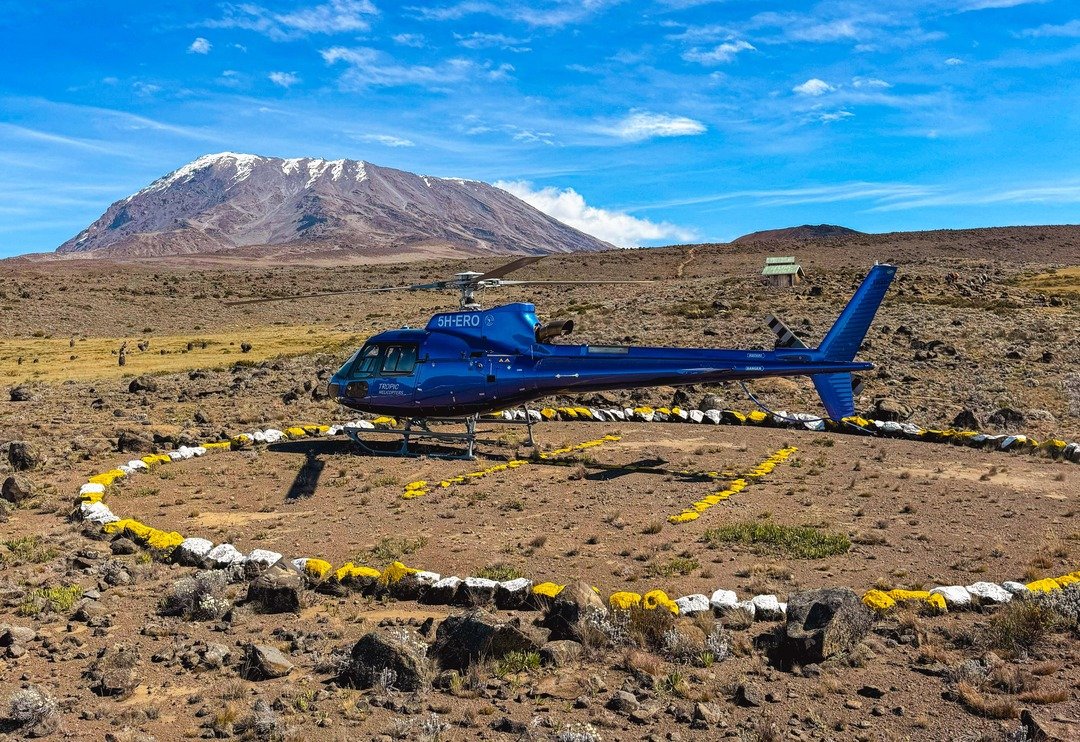
Registered coordination partner for helicopter rescue from the mountain when safe descent isn’t possible.
🎓 6. WFR‑Certified Lead Guides
All lead guides hold Wilderness First Responder (WFR) certification – the international gold standard in remote emergency medicine.
🚁 Emergency Evacuation: How It Works
If a climber has severe AMS (HACE or HAPE) and cannot descend safely on foot, we activate our emergency plan:
- Immediate descent – with assistant guide and emergency oxygen.
- Gamow bag – simulates lower altitude while waiting for evacuation.
- Radio call to base – our Moshi office contacts AMREF Flying Doctors.
- Helicopter evacuation – from the mountain (if weather permits) or from the nearest airstrip after assisted descent.
- Transfer to hospital – in Moshi or Arusha for further treatment.
This is why travel insurance that covers helicopter evacuation above 4,000m is mandatory for all our climbers. We cannot organise a rescue without insurance guarantee.
📄 Travel Insurance Requirements
Your insurance policy must explicitly cover:
- Trekking at altitude above 5,000m (some policies only cover up to 4,000m – check carefully).
- Emergency medical evacuation by helicopter.
- Medical expenses, including hospitalisation and repatriation.
We recommend providers such as World Nomads, Global Rescue, or Allianz (but verify altitude limits). Standard travel insurance is not sufficient. We will ask for proof of insurance before your climb.
💡 Pro tip: Read the fine print. Some policies exclude “mountaineering” – Kilimanjaro is a trek, not mountaineering, but insurers may still classify it as hazardous activity. Call them to confirm.
❓ Frequently Asked Questions About Kilimanjaro Safety
A: With a responsible operator, it’s very safe. Most deaths are from altitude sickness or pre‑existing conditions, usually when climbers ignore symptoms. Our protocol prevents this.
A: An assistant guide will accompany you down. Your safety is never compromised, and you won’t be left alone.
A: Yes – but our guides also monitor you. Don’t obsess over numbers; how you feel is more important.
A: With early detection, almost all climbers descend safely. Helicopter rescues are rare but available when needed.
A: No – defibrillators are not practical at high altitude. Our focus is on preventing cardiac events through health screening and monitoring.
Ready to climb with a team that prioritises your safety?
Our guides are trained, our equipment is top‑notch, and our protocol is proven. Let’s get you to the summit – safely.