
Altitude Sickness on Kilimanjaro: Prevention, Symptoms & Safety
Your complete guide to understanding and managing AMS – from mild symptoms to emergency protocols.
📑 What you'll learn in this guide
🏔️ What Is Altitude Sickness (AMS)?
Acute Mountain Sickness (AMS) occurs when your body struggles to adapt to lower oxygen levels at high altitude. Above 2,500m (8,200ft), the air has less oxygen. Your body needs time to produce more red blood cells and adjust its breathing rate. If you ascend too quickly, AMS develops.
AMS affects up to 50-75% of climbers above 3,000m. It’s not a sign of weakness – even elite athletes get it. The good news: with proper prevention and early recognition, it’s almost always manageable.
⚠️ Symptoms at a Glance
| Severity | Symptoms | Action |
|---|---|---|
| Mild AMS | Headache, mild nausea, fatigue, dizziness, poor appetite, disturbed sleep | Rest, hydrate, don’t ascend further. Usually resolves in 24-48 hours. |
| Moderate AMS | Worsening headache, vomiting, shortness of breath at rest, severe fatigue | Stop ascending. Descend if symptoms don’t improve within a few hours. |
| Severe AMS (HACE/HAPE) | Confusion, ataxia (loss of coordination), chest tightness, frothy cough, blue lips | Immediate descent required. This is life‑threatening. |
🚨 Emergency warning signs: If you or a teammate experiences confusion, inability to walk in a straight line, or coughing up pink frothy sputum – descend immediately and call for help. These are signs of HACE (cerebral edema) or HAPE (pulmonary edema).
✅ 7 Proven Prevention Strategies
- Choose a longer route (7+ days): This is the single most effective prevention. The 8‑day Lemosho or 9‑day Northern Circuit give your body time to adapt.
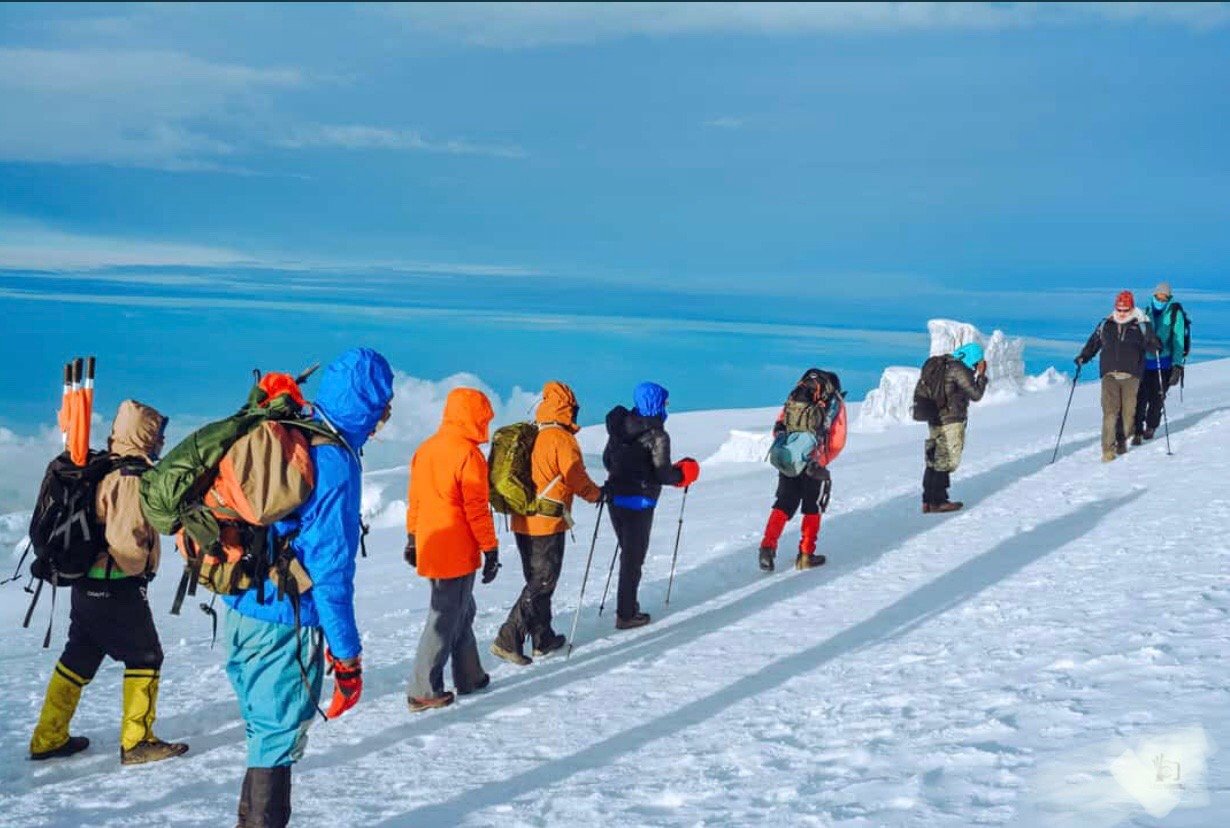
- Walk “pole pole” (slowly, slowly): Never rush. Our guides set a pace that allows you to talk comfortably while hiking.
- Hydrate relentlessly: Drink 3‑4 litres of water daily. Avoid alcohol and excessive caffeine.
- Eat well, even when not hungry: Your body needs calories to acclimatise. Our chefs prepare high‑energy meals.
- Follow “climb high, sleep low”: Our itineraries include acclimatisation hikes where you ascend to a higher point then return to a lower camp to sleep.
- Listen to your body: Be honest with your guide. Mild symptoms are normal; severe symptoms are not.
- Avoid sedatives and heavy meals before bedtime: Both can reduce oxygen intake during sleep.
💊 Diamox: What You Need to Know
Diamox (acetazolamide) is a medication that can help prevent and treat AMS. It works by acidifying the blood, which stimulates breathing and speeds up acclimatisation.
- Benefits: Reduces headache, improves sleep quality at altitude, and may prevent severe AMS.
- Side effects: Tingling in fingers and toes, increased urination, altered taste (carbonated drinks taste flat).
- Important: Diamox is a prescription medication. Consult your doctor before taking it. We do not dispense medication.
💡 Pro tip: Many climbers start Diamox 1‑2 days before ascending. But it’s not a substitute for slow ascent – you still need a proper itinerary.
🆘 What to Do If You Feel Unwell
Our guides check your oxygen saturation and heart rate twice daily. If you experience symptoms:
- Tell your guide immediately. Do not hide symptoms – it’s dangerous.
- Stop ascending. Rest at the same altitude.
- Hydrate and take a mild painkiller (ibuprofen/paracetamol) for headache.
- If symptoms worsen or don’t improve within a few hours, descend. Even 300‑500m can make a dramatic difference.
✅ Our descent guarantee: If you need to descend due to AMS, our assistant guide will accompany you to a lower altitude. Your safety is never compromised.
🛡️ Miwaleni Travel’s 6‑Point Safety Protocol
💊 1. Twice‑Daily Pulse Oximetry
Blood oxygen (SpO₂) and heart rate checked every morning and evening. Readings below 80% trigger immediate assessment.
🏔️ 2. Climb High, Sleep Low
Rest days and acclimatisation hikes built into all longer routes – the primary driver of our 95%+ success rate on 8‑day climbs.
💧 3. Guided Hydration Protocol
Guides encourage 3‑4 litres of water daily. All mountain water is filtered and boiled. Hot soups and teas at every camp.
🚑 4. Emergency Oxygen & Gamow Bag
Every expedition carries portable oxygen cylinders and a Gamow hyperbaric bag for life‑threatening altitude emergencies.
🚁 5. AMREF Flying Doctors Partnership
Registered coordination partner for helicopter rescue from the mountain when safe descent isn’t possible.
🎓 6. WFR‑Certified Lead Guides
All lead guides hold Wilderness First Responder (WFR) certification – the international gold standard in remote emergency medicine.
🧠 Altitude Sickness: Myths vs. Facts
| Myth: Fitness prevents AMS. | Fact: AMS affects fit and unfit people equally. Acclimatisation, not fitness, is what matters. |
| Myth: Diamox is a cure-all. | Fact: Diamox helps, but it’s not a substitute for slow ascent. You still need a proper itinerary. |
| Myth: If you feel fine at 3,000m, you’ll be fine at 5,000m. | Fact: AMS can strike suddenly at higher altitudes. Always monitor symptoms. |
| Myth: Descending is failure. | Fact: Descending is the smartest, bravest decision you can make. Many climbers return and succeed later. |
❓ Frequently Asked Questions About Altitude Sickness
A: Possibly, but it’s common. Mild AMS is normal. With a longer route and proper pacing, most people manage it well.
A: Descend. Even 300‑500m lower can eliminate symptoms within hours.
A: Yes, ibuprofen or paracetamol is fine for mild headache. Avoid aspirin (increases bleeding risk).
A: Discuss with your doctor. Many climbers take it as a preventive measure. It’s not mandatory but can be helpful.
A: If you have confusion, can’t walk straight, or cough up frothy sputum – that’s a medical emergency. Descend immediately and alert your guide.
Ready to climb safely with Miwaleni?
Our guides are trained in altitude medicine, and our itineraries are designed for maximum safety and success.